Showing posts with label Patreon. Show all posts

Wednesday, January 19, 2022

Project NEPTUNE: or Another Stab at Integrating Space Travel and Combat into TTRPGs that Does Not Suck

Who else would hitch dolphins to a chariot?*

This will definitely be a whole series of posts.

    In the link to the right Ken Burnside articulates a problem I've struggled with since I first tried to run the West End Games classic Star Wars: The Role-Playing Game in 1992; to whit: "How can I put the spaceships I love into a game in a way that actually adds fun to the game?"

    This is far from the first time I've tried tackling this task.   Indeed, I have a Goodle Drive full of unfinished and sometimes untitled documents detailing snippets of ideas, lengthy mission statements, and pages and pages of world building and lore.

    I hope I can actually use some of it.

THE PROBLEM    

Just so we're all on the same page, the problems I refer to is as follows:

  • The play style of space travel and combat in most TTRPGs is antithetical to the core play style of most TTPRGs.
  • The space combat is resolved on a unique type of battle map that uses a different scale, different time intervals, and different rules.  It is a mini-game functionally separate from the main game.
  • In space combat, the player that flies the spaceship is the only one with actual agency.  
  • Skills required to survive space combat are not applicable in character combat, and therefore may take away from the character's focus.
  • While the Pilot is the only character with agency, space combat rules often require more than one character to successfully fly and fight a ship.  This automatically puts one character in a command dynamic over the rest (bad) or an NPC is used as the commander over the PCs on a ship (worse)

    In some games, these are non-issues.  If you are playing, for example, as pilots in a starfighter squadron most of this goes away, because the spacecraft become simply another piece of equipment; an SF version of steed, lance and armor.  But not everyone wants to play a squadron of fighter pilots.

    There are also lot of other issues with space travel and combat in TTRPGs that are outside the scope of this series.  Like how many attempt to shove a streamlined war game into an RPG, or how many attempt to recreate a cinematic experience from a movie or television franchise.  These are considerations for another time, and perhaps other people.  

 THE GOAL

    If I have any chance of making a go at this project, I have to keep my scope focused down to the essentials of the game experience I want to enable:

  •  Player Agency: If something is going into the game at all, it must be there in the support of player agency.  That means we can't enforce a command dynamic and we can't turn the players into supporting die rolls for the pilot.
  • A Meaningful Experience: The decisions Characters make aboard ship must be meaningful to the Players.  The situations aboard ship must matter to the Gaming group and provide an experience rich enough to justify the time taken away from other aspects of the game. The actions players take must have observable consequences to validate their agency.
  • Integration: I am not interested in making a mini-game to add onto a character-based TTRPG.  I am interested in making spaceship-based travel, exploration and combat as integral to the game as dungeon-based travel exploration and combat is to the OSR.

    Whether or not I can succeed in that goal remains to be seen.  I've been thinking, reading, working on the ideas for almost ten years now.

    Ten years.  

    Wish me luck!

   *The image above was commisioned by Mr.Burnside from artist Claire Peacey (instagram.com/autumnskyart/?) whose work and work ethic is highly recommended.


Wednesday, January 5, 2022

Murdering Empire in a Single Page?

Yeah, that guy.
    Despite having had the long weekend, I haven't spent any of that time work on this blog. I have spent some of it thinking about an actual product. It's all in a very early stage right now, but I've become enamored with an idea inspired by binge-watching Questing Beast's Zine reviews and the one-page RPGs like the 24XX family of games.

    The idea is simple:  If your rules can fit on a single page front-and-back, then you could use them as the cover of a zine.  You could make a zine about anything you like, and include a bespoke variant of those one-page rules as the cover.  If those bespoke rules are closely enough related, and the zine contents are a semi-unified setting (like Thousand Islands, for example) then you don't actually need anything else.  You can use as many of the zines or a few as you have/want. 


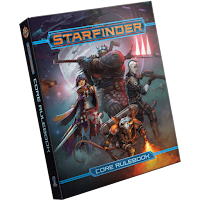
Where are the Aliens, Paizo?  Huh?

   I personally own 500-odd-page core rulebooks for some games that cover everything under the sun (or not) but they're hard to use because I may only need a fraction of the material,  and the things weigh like, ten pounds. If instead there was a zine that includes the basics of the setting (suitably anti-canonical) with basic rules as the cover, you could now play the game quickly and easily because you don't really need anything else.

    But say you wanted more.  Say, like me, you want to have spaceships a part of the game.  So you get the zine that has spaceships - and the rules on that zine's cover include starship rules while the zine has a fun adventure or something.  If the starship zine is all you have, it has enough rules to play a starship-focused game bt if you have other zines, then it adds to the available rules.  You can use as many or as few of the zines and their bespoke rules as you like.

    I'm hoping to have some more development with this idea as I blend in more of my ideas and preferences about what I like in games.  For those who are familiar with my previous body of work on DriveThruRPG or through Patreon, me working on short spats and zines should come as no surprise.

Wednesday, December 29, 2021

When Murdering Empires, How you Play is What you Win

     Bonus points to those who recognize the quote.

Yes, even the Skill Challenges.

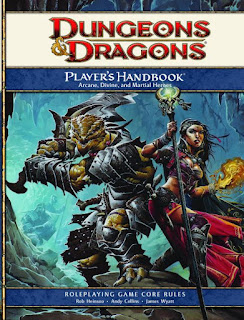
     I have a confession:  The 4th edition of D&D is the only set of rules - for any rpg - that i've run Rules As Written.  The system was, as far as it intentions went, perfect.  The XP notation, monster blocs, the unified leveling mechanic, the treasure parcels, the encounter design tools - I even used skill challenges as written.  The 4e rules made it so easy to design and run an adventure that it was a pleasure to use at the table.

     So much so that it took me years to realize I didn't really like the game.

     Trying to adapt  the 3rd edition material to a 4th edition game by myself was a path down which lay madness.  The mechanics that were exquisitely simple on the front end seemed to hide furiously opaque math on the back end. This also made 4th edition terrible for those among us that like to make their own character classes or to multi-class ad infinitum.  The interlocking obligations of Balance between PC/encounter/monster/treasure level made such experiments not only difficult to develop, but impossible under the rules as written.  

Making unique classes and adapting your own material wasn't what the game was about.

     Put simply, the games I ran ended up being walks from set-piece encounter to set-piece encounter to fight monsters and grab a treasure parcel.  The "perfect" balance of the system made the encounters feel bland and much the same. Since they were balanced for your party's size and level, a fight against four goblins at first level had the same stakes and difficulty as a fight against four Sorrowsworn at twenty-fifth - but takes a lot longer because of feature creep.

    I understand that there is nothing in the rules forbidding more open and interesting play, there also nothing in the RAW rewarding different play.  You get XP from killing monsters.  You get treasure from killing monsters - either directly as loot or indirectly as quest rewards.  The special powers and class features you earn are overwhelmingly mechanics to allow Characters to kill more monsters.  The goal is to level up you Character and collect treasure to get new powers and equipment to...kill more monsters.

    Its a game about killing monsters.  How you play is what you win.

    D&D wasn't always about killing monsters.  One of the pillars of the modern OSR movement is the idea of rewarding XP for gold spent - no matter how you got it.  This opens up a lot more options for play that don't have to involve killing monsters.  It also allows one to de-emphasize balance, since you are under no obligation to tangle with a monster that in order to get XP.  Far more prolific Bloggers than I have covered the nature of OSR play and how rewarding for gold spent is important to the aesthetic of Conan-type characters who hunt treasure, spend it all on insane carousing and magic items until they're broke again and need more treasure.

    Again, how you play is what you win.

    Before I get too serious about developing Murdering Empire as a game system and associated support content, I need to decide what kind of play I want to reward.  What is a game of adventuring through a collapsing galactic empire actually about?  What do you do?

    Keeping with the philosophy of anti-cannon, I don't want to create a meta-plot.  I'm really leaning into the idea that people not only don't know what happened to the Empire, many people don't even know what the Empire was.

    I once again refer to Space Skimmer for the game's general mood:

    "The Empire itself was neither just nor unjust. It existed simply to fulfill a purpose—communication between all men; but whenever action was taken in its name, that action reflected the men directing it. If they were just, then so was the Empire. If they were unjust—"

-Gerrold, David. Space Skimmer

    GOLD.

    It's too good an idea to let go.  I want to see starships enter a new system with great caution, never knowing what they can expect. Part of this comes from Space Viking, which for all it's faults has a sense of consistent scale when discussing the plot's man-hunt: 

    "We'll hear where he was a year ago, and by the time we get there, he'll be gone for a year and a half to two years. We've been raiding the Old Federation for over three hundred years, Lord Trask. At present, I'd say there are at least two hundred Space Viking ships in operation. Why haven't we raided it bare long ago? Well, that's the answer: distance and voyage-time. You know, Dunnan could die of old age—which is not a usual cause of death among Space Vikings—before you caught up with him. And your youngest ship's-boy could die of old age before he found out about it."

-Piper, H. Beam.  Space Viking

    With these two passages as dim guide-posts, I can see I want to reward traveling into the unknown with little more than rumors third-hand accounts. I also want to play with the idea that civilization and Empire are not synonymous. 

      And I want there to be Spaceships.  I want to have travel from world to world incentivized. 

That dome? Spaceship.


         The ideas of what you reward, what you want a game to be about, and game design in general grow tangents like hydra.  In the time it's taken to write this much, I've thought of:

  • The core game loop, or what you Players can do when they don't know what to do.
  • Currency and Economic and how much I don't want a game about that.
  • How to evoke a sense of wonder in a game using such well known tropes, and
  • All the stuff about what was great about 3rd edition D&D that I had to cut for this post. 

    I don't think I'll be doing all of these in order, because I already had a few ideas for blog posts I wanted to explore.  But that's good - having ideas to write about makes me confident I will keep writing.

    Look for the How you play/What you win tag for more posts in this series.


Wednesday, December 22, 2021

Murdering Empire with the Anti-Canon

I swear this is what mine looked like when I got it in 1980

Do you remember when Queen Amidala was supposed to be a clone!?

    The Handmaidens that surrounded her weren’t dressed to be her body doubles - They are all the Queen, and one was dressed to sit on the throne.  Meanwhile, the servant girl gossiping with the cook belowstairs? The Queen.  The naive looking lady-in-waiting you’re trying to bribe? The Queen. The pilot running toward the destroyed royal barge and the crumpled figure at the edge of the wreak?  Both the Queen.

    Most politicians and nobles in the galaxy were actually clones.  Like we’d see twenty-two years later in the Foundation series, having a genetic dynasty of clones was stagnating the Republic.  

    Then they tried to clone Jedi, starting with OB (old Ben) One.


    If you don’t remember this version of the prequels and subsequent Clone Wars, that’s understandable.  To the best of my knowledge, they only appeared in spoken form around a gaming table in 2002, and in the conversations that followed.  

I wish I could say that I encouraged this kind of creativity more than I did.  The truth is, I would get so emotionally involved in the settings I was making (or using) that I’d railroad players along what turned out to be rather boring adventures.  I'd remember my earlier experiences as a GM and feeling like that at any moment the whole session would go off the rails and devolve into a handful of private conversations instead of a collective role-play experience.  That had happened too often in the old days as my drinking got worse, and now that I was sober-

I thought I knew better. I thought that I needed more control.  

So I was GM-ing like a tyrannical asshole. Especially when playing with my wife Debra in the early part of our marriage. Most of the Clone Queen stuff was her ideas. With the benefit of hindsight I realize that what was happening could have been influenced by Debra and I just having had our first child, my just starting back to college, and the overwhelming feelings involved.  Well, that and my being a narcissist and desperately trying to grab the attention from my new child.  If I had articulated and communicated some of that, had I been able to- 

Debra and I don’t play anymore. 

Anti Canon

I read Luca Rejec’s post on the Anti Canon a few weeks ago.  When Luca describes the frustration of trying to run a campaign in The Forgotten Realms or on The Discworld, the frustration of not being able to “to improvise, innovate, or imagine.”, I remembered The Queen’s Clones.  I remembered how some of my favorite lore in Star Wars appeared at game tables in the mid- to late nineties from groups of friends riffing off the canon lore and making up stuff to fill the blank spots on the map.  As much as I like having new Star Wars movies and TV series - more hours of Star Wars have been filmed or drawn in the last ten years than the preceding thirty - It’s getting too…close.  There’s less and less room for my imagination as canon continues to cover more and more space in the Official Timeline. It’s happening to Star Trek as well and I feel like some of the hashtag-not-my-star-wars-star-trek-insert-IP-here diatribes that fill the internet are a response when they aren't racist/sexist whining. 

These thoughts about anti canon are half the inspiration for Murdering Empire.  The other half involves David Gerrold’s Space Skimmer.


Space Skimmer

I have a lot of time for David Gerrold.  He invented the Tribble! And also has written some of the most evocative prose on science fiction I’ve ever read.  Sometimes, his non-fiction about sci-fi worldbuilding is more evocative than his narratives.  But in Space Skimmer, all of this comes together in a handful of paragraphs that describe an empire, a history, a universe that has haunted me ever since.

I could describe it to you in a brief summary but it would have none of that exquisite flavor, and would also miss the point.  Instead, perhaps a quote:

News travelled via the Empire Mercantile Fleets, synthesized as Oracle tabs. Or via independent traders, synthesized as rumor. It leapfrogged from planet to planet, not according to any kind of system, but by the degree of mercantile importance in which any planet was held by its immediate neighbors. 

Every event was the center of a core of spreading ripples—unevenly growing concentric circles of reaction; like batons, the Oracle tabs were passed from ship to ship, from fleet to fleet, from planet to planet, passed and duplicated and passed again; taking ten, twenty or thirty years to work their way across the Empire. By the time any part of the human race received news from its opposite side, it was no longer news, but history. 

The Empire’s communications were the best possible, but they weren’t good enough. 

Control depends upon communication. Weak communications means weak control, eventually no control at all. 

-Gerrold, David. Space Skimmer


That is what inspires me from this novel. The empire was gone and no one knew why.  That’s what matters.

Baking-in Anti Canon

 As we discussed last week, the reasons for the Empire's disappearance are unknown and perhaps unknowable.  The reasons people believe tell us more about them than what happened.

The information gathered at the time of the Empire’s demise, by the people that were there, are not necessarily any more accurate than hindsight and speculation centuries after the fact.  Why should it be? If the agents of Empire knew why it was collapsing, they would have done something about it, wouldn't they? 

That’s the context of this new project.  Not having a firm history and not knowing which of the old stories are fact or opinion is organic and natural to a post-collapse society.  This lets anti canon be baked into the system and implied setting of the game.  This is important to me and what I want the game to be about: no one knows or can know what happened to the Empire  - Including the GM.  

Here are my thoughts so far on how to nurture that idea:

  • Players are able to fill in the setting and lore details about their characters’ homeworlds, species, local color/customs, etc.  

  • The GM is able to fill in the setting details and lore about NPCs, adventure information, and they arbitrate the rules.

  • The GM’s opinion of the background setting and lore does not have to be considered more true than the Players’.

  • As the Game’s Designer, I present to you the basic rules for running the game, an outline of the setting’s central premise and then I support help the rules and premise with more content.

  • As the Game’s Designer, my opinion of the background setting and lore is the least important.

The last point is important to me as well on a personal level. I do not want to tell other people they’re playing the game wrong.

To that end, The work I’m doing on the setting will be…not so much brief as it will be unverified, contradictory, and above all random.

Wednesday, December 15, 2021

On Murdering Empires

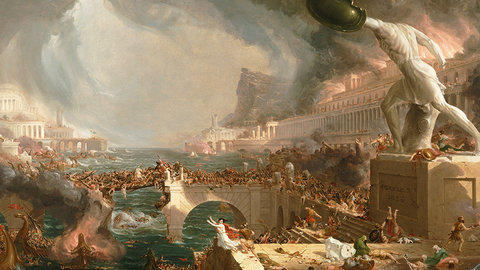
         Why did Rome fall?

Did Rome actually fall, or just decline until noting but memories remain?

When did Rome fall? With the city itself in 410? During the sack of Ravenna in 476?  Or the fall of Constantinople in 1453?  That’s a thousand-year span - can we not narrow it down better than that?

And why did Rome fall?  Was it lead water pipes, the decline of the military, the rise of Christianity, the parasitic masses on the Dole, the parasitic aristocracy in the Senate, barbarians at the gates - 

All of these have been proposed and all have been argued.  

All may be wrong.

All may be right.

The reason I’m mentioning Rome at all has to do with Space Vikings, with pseudoscience, and with expectations.

And gaming, of course.  

This is still Blue Max Studios.


Space Vikings

By H. Beam Piper.  I’ve read it a few times. It's an adventure tale of revenge, swashbuckling action, making money by killing people, and best of all, bringing Civilization to a nearly empty planet.

Colonialism, in other words.

Feel free to read it yourself .  It’s copyright lapsed and doing so would be instructive.  The book was a major influence on the Traveller RPG, for one thing.  I genuinely liked the book;  It’s a good adventure story, it’s internally consistent as far as ships’ speed and travel times go, and I like how the distance and lack of FTL communication are an integral part of the story.  

The thing is, I have the privilege to enjoy this book. I'm a middle-aged, white, cis, male American. I can read stories of colonialism, massacres, rape and pillage, and smug men telling each other what’s wrong with the world and appreciate the good parts because the bad parts are far enough outside my personal experience for me to ignore.

But this post isn’t a book review.


Pseudoscience

    Space Viking was written half a century ago and shows it.  Not just in the rubber science of the magical space guns, space drives and profusion of habitable planets.  The dangerous bits of rubber science are the old social ideas and biological theories the book accepts as fact.  Everyone knows we don’t have starships.  People still believe in ideas such as:

  • Decay of the Fatherland: Or the idea that nations that colonize become dumber as all the Good Stock leave to live in the wilderness.

  • Bread and Circuses: The idea that great civilizations fall when they start using their tax money to provide social services.

  • Eugenics: So, so much eugenics in Science Fiction - I may have to write a whole post about it if I can stomach the topic that long. 

  • Empire Protects Us From Ourselves.  This wasn’t even new in the 17th century when Hobbes wrote Leviathan. It's the idea that we need police and soldiers and Authority in general to keep us safe because We the People will kill and/or each other if there is no one in charge.

I used to believe some of this.  I was supposed to believe in all of it.  It’s the Official Party Line that keeps people like me in power. 


Expectiations

That, patient reader, is my point - The reasons I was taught for the fall of Rome - or anything else - are just a story.  There is no evidence for any of it and a good bit against it.  We live in a world where people help one another when disaster strikes, where the only thing Empires all have in common is that they pump wealth from the fringe to the core and Genius - if the word has any meaning at all - is completely random and everyone is biased for and against ideas regardless of fact.  

Why did Rome Fall?  The reasons are not only unknown, they are unknowable.  Too much time, too many conflicting ideas and far far too much vested interest in one story or another has made such a question unanswerable.  

The answers we believe in say more about us than they do about Rome.

    When you read the title of this blog post, did you think about how empires murder, or about how to murder an empire?

That’s what my next gaming project is about.

Friday, March 24, 2017

Starships & Spacemen Examined: S&S, Triplanetary, and real Stars and Planets...

     To the left is (hopefully) the solution to my dilemma.  Rather than wax lyrical about how I came to arrive at my current notion, I'm just gonna hash it out for you.
     I'm ditching the FTL system in Starships & Spacemen and replacing it with my "Rabbithole" system.  If you don'l know what that is, I wrote a a whole article about it in LAUNCH WINDOW 0.5, so you can read about it there.  Go ahead, its Pay What You Want.
    In brief, Interstellar travel involves (will involve) seeking out naturally occurring wormholes in close orbit that link certain stars together.  These "Rabbitholes" are natural so the temporal/causal effects of using them are accounted for.  The causal effects of wormholes are fascinating and will make for cool fiction.  Currently, Dr. Luke Campbell is doing just that, and will do a better job that I ever could.
    Because we will be handling interstellar travel via wormhole, the movement rules for interstellar travel in S&S are invalidated.  This is a shame, as the Energy Point system/ Power Pile Base is one of the fun features of the game.  The solution I have to this is to Use the movement rules, modified a bit, in Interplanetary space.  This also has the advantage of letting use use Node Maps for the game and rest peacefully in the knowledge that our stars are real.
     Refining the movement system of Starships & Spacemen to work in interplanetary space will require a few extra steps and things. One, we have to account for orbital space, and gravity.  Two, some sort of Newtonian engine would be appreciated.  I mean, its hard to watch a Star Trek film where a ship loses power and stops, and sometimes even starts to sink.   Besides, I like the idea of watching starships go at in the frictionless black like a pair of hockey players with a grudge.
     Anyway, I don't fancy making my own movement system from scratch, so I plan on borrowing elements from the above shown game: GDW's Triplanetary.  As Winchell Chung put it on Project Rho, "This game has the One True way of managing vector movement in two dimensions." He's not the only person to day so, and I bow to superior mechanics. 
    Anyway, right now I'm thinking of the mechanics of S&S, and the vectors/gravity of Triplanetary for simulating orbits and stuff.  The system maps will be a lot easier to make than one would think.  Using Winch's Node Maps as a spring board, I can take the star names, pop them into Google, and see if the star has any planets and what their features are.  I will be a bit time consuming, but not especially hard...
  Anyway, that's what I've got so far, Rocketfans.  See you next week!

Tuesday, December 13, 2016

It's coming together... (T-MINUS 4 DAYS)

     Rescheduling of family functions and the normal psychotic pace of the so-called "Holidays" has made getting the magazine finished a marathon of endurance. It coming together, however.  Stargosy Part 1 and both articles are finished, as well as a lot of the art. I'm especially loving the cover for the Stargosy story:
    Modelling that cruiser was an exercise in endurance as well.
    Anyway, I got the first round of character art in from Chris Ford, who did the portraits in the previous Issue.  He arts a comic on Comic Fury called "The Accidental Witch" as well as a Harry-Potter-meets-Speampunk-Oz Patreon exculsive called "Soleil & Selene".  You should check them out.
    I like using Ford's character portraits because they a never what I expect.  His take on the characters from Stargosy, for example - I would never have thought of that!  Check it out:

    And I've also been hard at work drawing the bonus Isometric map for Issue 1:


    I hope you all are as excited about the upcoming issue as I am!  Now, if you'll excuse me, I've got a doctor's appointment that was rescheduled for...now!  Gotta go!

Tuesday, September 20, 2016

Drawing Spaceships Crooked (Isometric Projection)

     Just to be different, RocketFans, I thought I'd actually make a post.
     Kidding aside, I've been working at a day job of late and dealing with getting myself back into the groove of time management, scheduling, and all the things I haven't had to think about since comas and brain damage removed me from the conventional labor force.  I'm not sure how to describe the experience.  Imagine having to re-learn not only the moves and routines of something you've done all of your adult life, but have to re-learn some of the concepts behind the routines and moves.  Only a strict regimen of bi-hourly doses of insulin and daily doses of anti-depressants and anxiety meds.
    I only mention this to explain my sometimes (okay, often) erratic postings and tendency to tail of in mid-series.  I'll put it this way:  Normal blood sugar is between 70 and 90.  Mine has gone from 461 to 39 in the space of six hours.  At least once a week.
    Moving along...
    As the title suggests, I've been playing with isometric projections and cutaways.  If you're not 100% familiar with the concept,  It's like this:
Tantive IV FTW
     I love these kinds of images.  I've got all of the Incredible Cross Sections books and I've dreamed of being able to make my ships into art like this.  After all, I taught myself how to make the deckplans, the orthos, the CG models, and everything else you've seen in my previous work, what's one more technique?
     To start with, I got some iso-grid paper.  This wonderful stuff is great for folks who do not have drafting tables and 3 degree triangles in their inventories and better still, it takes a lot less time to use than blank paper.  After watching a brief YouTube tutorial on how to draw isometric circles, I was off and running!
     Here is an image of what could be a variation of the Heinlein Rocket's Keel:

     Rather than try to ink this little sketch, I did what I think is the smart thing and scanned it into the computer and printed it out at three times the original size:

     This is the version I inked.  I used pens and did it by hand, because I'm old school.  And because it's faster...

 
     But after that, I put the inked imaged back into the computer, fired up the GIMP, and cleaned it up.  I not only scrubbed out the blue guide lines, I fixed mistakes and added some details that were just too fiddly for me to work in with a hand pen.  Thank goodness for a computers extreme zoom!


A drawing like this can still be confusing if left in un-shaded black-and-white.  Besides, I wanted to capture the style of the ICS books, so I colorized the image and added some additional details.  This is the latest iteration:

     I did not add any shading or people to the image, because this is only a test.  Now that I've managed to create a workflow and get some practice in, I'm going to start working on making some real spaceship art.  I will naturally be posting the results regularly on Patreon and here, and once I've finished a collection for a particular spacecraft, a published volume would not be out of order.  I look forward to it.
     I just want to take a moment and sing the praises of the Patreon system.  Back before the advent of monthly crowd-funding, I would never have felt like I had the time to work on this kind of art.  I had to stay within the bounds of the admittedly narrow style I had already developed for making deckplans and churn out books monthly if I was to expect to see any decent money from the enterprise.  Even then, the money wasn't that decent, but for a family of five living on $17,000 a year, it meant the difference between a real birthday party for the kids or just a present and box cake.  With Patreon, however, I'm at the level I of monthly income slightly above that of when I had to get a thirty-page book out every thirty days.  That means I can actually explore new ideas, like the nano-fic, the maps, and these isometric drawings.  Now I know I can take my time and work on a single, long-term project because I not only have a venue with which to share the progress, I have the support it takes to finish it.  So thank you to all my Patrons out there, for making this possible.
   Got a little sentimental.  It happens.  Anyway, soon-ish, I'll be talking about my next major project and what books Debra and I are working on, as well as whatever Rob Garitta has cooked up in his devious little mind.  See you then!


Google+