Showing posts with label Rules. Show all posts

Wednesday, March 9, 2022

More on Anti-Canon: Ways to Imply a Setting

    The other day on Twitter the question was asked: "When world building, what do you start with?"  My answer was probably obvious to anyone who has read my blog.

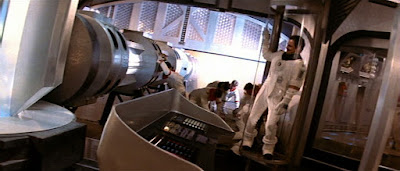
    I start with a spaceship. I am a spaceship nerd. 
Pictured: My Spirit animal


   Then I start thinking about how it would work, the technology it'd need and what that implies for population and education and what else that technology would be used for beside spaceships and how many people must live in space for spaceships to be this common or rare and how long it'd take to develop that technology -

    Spaceships may operate in a vacuum but they aren't designed, built or maintained in one. Even if they were, every aspect of their being is dependent on a cascade of technological assumptions.  Last week we discussed how this makes designing rules for more than one franchise difficult. This week, we'll take advantage of this to imply setting in an anti-canonical game.

    One idea I'm using to imply my idea of a setting but not making it canon is stolen borrowed once again from Electric Bastionland. A large section of that game involves Failed Careers - what your character was doing before losing it all, getting in debt and becoming a treasure hunter.
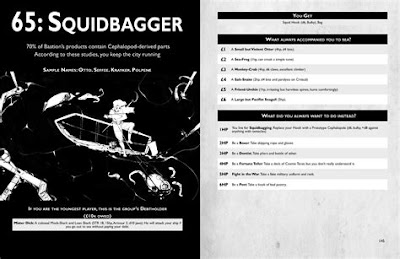
 

What does "Squidbagger" say about a setting?
     

    I am not including d100 failed careers but I am using a similar concept in Character Pasts.  In our Project NEPTUNE rules set a Character Past will be include a Character card (3x5) a resource card (2.5x3.5 trading card) and condition card (also trading card).  Let's look at one of the cards and see how it helps imply a setting:
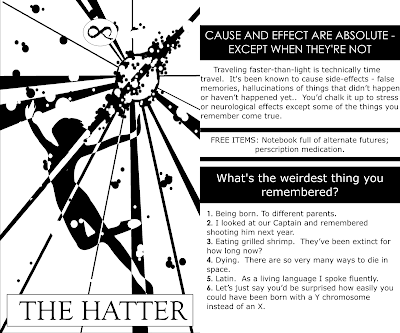
     

Front and back, with room for notches.

      If you'll open the image above and read the card, you'll find quite a bit of implied setting:

  • There's the name itself: This is a setting that includes Earth and Alice's Adventures in Wonderland is still a known IP.
  • The setting is Hard SF. FTL = Time travel is the understanding of current physics.  Actually using that as a potential plot point says that implications normally ignored in science fiction will be explored - or at least played with.
  • The setting is going to deal with mental issues. And they are still somewhat stigmatized. False memories, hallucinations, or actual memories?  You get prescription meds either way. 
  • This setting can get dark. Remembering killing someone? Remembering dying? Shrimp are extinct?

     Some of the other Pasts I'm working on include:

  • THE RELATOR: Psychiatrists for Artificial Intelligences.
  • THE CHRONOI: People from Saturn - complete with wind chimes. 
  • SANTA'S HELPER: means the setting has Santa Claus Machines
  • THE WALKER: The Rainbow Road of Mars is marked with the multi-colored spacesuits of those that died walking it.  It's become something of a religion.


   So there are a lot of setting elements here, but only if they interest you.  This is all on a single index card.  Use it if you want and if not, put it back into the stack and forget about it.  And even if you choose to use a Past card, it's not a wall-of-text info-dump because there's a finite amount of space on the card, and that's all I get to sell you on the concept.

    Using spaceships to imply a setting is a bit different.  Space travel and combat is the sin qua non of Project NEPTUNE and the kind of spacecraft available will have an impact that cannot be ignored.  Fortunately, our use of Causal Influence Diagrams let us take the technology of a spaceship can be mixed-and matched to a certain extent. And again, you the tech you don't want to use can go in the stack and be safely ignored.

    I'm not sure if of the reason I feel compelled to use a rule or item that's in a game's rules or setting is because I can see it on the page when I open the book, but the edge-notched card will keep them safely out of sight and out of mind either way.

Wednesday, March 2, 2022

Project NEPTUNE: Making the Procedures Universal

Faci-NOPE.
    More than any other genre I'm aware of, Science Fiction is defined by it's technology.  For example, the difference between Clash of the Titans and Lord of the Rings is to my mind less than the difference between Star Trek and Star Wars.  And both of those have almost nothing in common with The Expanse.

    This is relevant to game design because I could run a game set in Middle Earth or Mythic Greece using D&D with no real problems.  I could not run Star Wars using Star Trek RPG rules or vice versa. Warp Drive, Transporters, Lightsabers, The Force - I would spend enough time in conversions from one system to the other that I may as well just get both games.

    While there are more universal SF RPGs out there (and GURPS, of course) this usually puts the problem on the GM.  Systems such as STAR HERO for example make it possible to build virtually anything you can imagine - at the expense of having to build everything you imagine.  This kind of time sink can be more intensive than actually learning multiple game systems and encourage GMs to purchase multiple games.

    I intend to address both problems.

Yes, I know what it means.
  

    The inspiration for this part of Project NEPTUNE comes from the same place I get most of my inspiration: Winchell Chung's Project Rho.  While most famous among SF aficionados for Atomic Rockets,  Chung's Project Rho has other treasures for those who seek them.  Two of those treasures are going to be the key to making space travel and combat interesting, full of player agency, easy for GMs to prep and run, and useful across multiple franchises.

INFLUENCE DIAGRAMS

    Project Rho has a whole section on cool game mechanics that bares careful study. Among them is a single article by Neel Krishnaswami that can, as of 2022, only be found on Project Rho.  I'll give a high pass of what's important for us here, but the full article is excellent and I lament there was no follow up.

    Seriously, go read it.

    The example in the article addresses Star Trek in particular but the core idea applies to any technology. By breaking down a SF tech like warp drive or what have you into individual systems or components, you can build a causal influence diagram that gives the player details that actually matter.  This can be presented as a handout (or card) to the players and used by character to repair tech, work with tech and generally make the tech more real at the table.

    Since I'm working on the idea of Crew as Damage Control, I'm naturally drawn to this notion.

The rules for this -

    What makes this work across multiple franchises is that the procedure of using the Causal Influence Diagram is universal while the tech itself is modular.  For example, If I were playing a Star Trek style game, I'd want a CID of a warp drive.  It would have bubbles like Matter/Antimatter containment, Warp Core, Plasma Conduits and Warp Coils.  My Engineer character would use that to troubleshoot damage and tell the captain that She cannae take much more o' this.

- are the same as the rules for this.
    If I'm playing a smuggler in a Star Wars style game, I'd want my CID to have Hypermatter Coaxium Magic bottles, a Fusion Reactor, Hyperdrive Motivator and Field Guides.  I may not know what any of that stuff means but they're on the diagram and I can use them because the procedure of using the diagram is the same no matter what SF tech I'm modelling.

    So when folks on Twitter ask me if the work I'm doing on space travel and combat can apply to their favorite game, I can say with confidence that yes, yes it will. 

    Using the Analog Database makes this work even better.   Any ship system, from any franchise can not only be diagrammed, but the cards stored in the same stacks and simply filtered by search term.  Packaged and sold individually, a deckof cards inspired by a given franshise could contain the tech, character backgrounds, and unique rules required to fully use the setting without needing an entirely new game.

BEYOND TECH

    I found another article on Project Rho that brings home to me the potential of this idea.  Ron Edward's The Sorcerer's Soul was also praised for it's use of relationship maps.   I got a copy of the book and perused that section - it didn't take me long to realize that Relationship Maps and Causal Influence Diagrams can be considered the same thing.

    So if CIDs can be used for physical objects and networks, and also for social relationships and people, could it also be used for ideas or intellectual pursuits?  Justin Alexander has pretty much proven it can - and provided excellent advice on how to use them as well.

    For me this means that not only can the conflict rules in SACRIFICES be used for physical, mental and social conflicts, CIDs can be used for physical, mental and social networks as well

    The system would be unified across all three attributes - which means it's unified across the entire game.  Across any game I want to make.

Still know what it means.
    More to come next week.


Tuesday, February 22, 2022

SACRIFICES: The Rules System I'm Developing


It can be said that most if not all classic TTPGs are based around resource management.

    The OSR has codified this in the myriad of rules that govern how to die in explore a dungeon. Time, spells, food, arrows - light -  are all limited and requires careful tracking.  Even at individual tables that don't follow Encumbrance rules or and lack magic there are finite resources baked into any game that has combat - hit points.  These may have different names and may drain attributes instead but attributes themselves are a limited resource if your think about it. No matter how your particular game is configured, part of what makes games games is limited resources because that's part of what defines risk.  

"You think you dissect me with this blunt little tool?"

    For the most part games have dealt with physical resources.  Some have attempted to quantify abstracts and mental states with such measures as "willpower" and "sanity" which have are problematic in and of themselves.

    Ive seen a few attempts at expanding what 'Inventory' means, such as in Knave, and Mausritter where spells are on/in individual runestones or grimoires.  These are still a physical items, however.

    What if everything was in Inventory? Not just your stuff, but your friends, your memories - everything?

THE BASICS

    In keeping with my commitment to put everything on index cards in an analog database, I've started writing up this rules system with a summary that can fit on a 5x8 inch card:

  • You have three SAVES, MIND, BODY, and SPIRIT.  

  • When you face a choice and have something to lose, you make a SAVING

    THROW.  If you roll under your Save, you succeed.  If you don’t, you face

    the Consequences.

  • You have a number of SLOTS equal to your Save values. The Slots make 

    up an INVENTORY. Each Save has its own Inventory.

  • Inventories hold RESOURCES.  Resources help solve problems, or are 

    good in a Conflict.

  • Empty slots represent INSIGHTS (MIND), ACTIONS (BODY), and FAVORS 

    (SPIRIT).

  • Each Save also has a PROTECTION:  MORALE (MIN), DODGE (BOD), and 

    REPutation (SPI).

  • CONFLICTS happen when someone or something opposes you.  

    • A Conflict starts with a BOD Save to avoid Surprise. All opposing 

      parties (not individuals) roll and the lowest roll wins.  If there is a

       tie, no one is surprised and the party with the highest PHY Save 

      goes first.

    • THERE ARE NO TO-HIT ROLLS. Declare your action and roll for the

      Consequences.  

    • CONSEQUENCES are measured in points.  They subtract from your 

      character’s Protections, then Resources, then Saves in that order. 

  • For each point you lose from a Save, you take a CONDITION.  You must 

    sacrifice one of your Resources for every Condition you take.  Conditions 

    have specific ways they need to be resolved.  Once the condition is 

    resolved, you get the Save point - and the Resource Slot- back.   

  • If ANY of your Saves drop to zero, you’re finished. Whether  BROKEN 

    (MIND) CRIPPLED (BODY), or OSTRACIZED (SPIRIT), you’re adventuring 

    days are over.

    So, yeah.  That's pretty much it.

THE IMPLICIT DEPTH

    Again, this is a basic summary of the entire rules system and is barer than bones.  But I feel like just what I have here implies some of the depth I'm going for. For example:

  • The rules imply equality to physical, psychological, and social conflicts.  They all use the same rules for resolving conflict, and the consequences of any type of conflict can end your adventure.
  • You don't need math to track your inventory - your slots are your slots.  Thanks to using cards, you can physically hold your items, skills, and social contacts - and the rules for using them -  in your hands at the table.
  • Empty slots are still useful and help refine the character.  Fill your body inventory and you're strong, but leave open slots for Actions and you're fast.  Insights would mean your wise, and Favors can be seen as valuing others less for their friendship and more for what they can do for you.
  • Every point of Consequences that causes a stat to drop takes a slot of inventory away, and fills it with a Condition.  If you don't have any empty slots, you'll have to choose one of your Resources to give up until you can resolve the Condition. 

    The system is called SACRIFICES for a reason.

    The resource cards really add to the play experience for me.  Like many Odd hacks, my Conflict system pares back the procedure just to the interesting decisions: Do I fight?  Do I keep fighting?  But the cards-

    There have been studies that show people spend less when paying in cash.  The physical act of handing over money makes people much more mindful of their spending.  By requiring players to actually hand over their Resources when they take a Condition, actually having to choose which of their finite resources to sacrifice, Inventory become a real thing, and the consequences of the players' choice become tangible.

    And that is another part of what makes games games. Meaningful choices that players care about.

 * * *

    We're going to be breaking down and expanding on the ideas in the rules summary in coming weeks, but before that we'll introduce the third pillar of Project NEPTUNE - the one that will allow my work on space travel and combat to be used with multiple systems and franchises.

    Stay tuned.


Wednesday, January 26, 2022

Project NEPTUNE Part II: Crew as Damage Control

 
Made with Daz 3d, Bryce and GIMP
  
As we said last week, space combat in RPGs is generally a pain.
This is one of the reasons I started designing my own SF RPG as soon as I discovered my favorite rules system was now OGL.

     Part of that effort, the Black Desert Project, led to my series of blog posts about Crew as Mission Control. The premise being that given the way computers have advanced, the crew of a realistic spacecraft will not be occupied by actually flying or fighting the ship - they will be there to monitor, manage, and direct the various Computer networks. It became the most popular series of posts in this blog's history and has stood as my humble contribution to Hard Science FictionTM.

    I stand by that series. I am convinced that it's the best way to include people on spacecraft in Hard Science Fiction. I would love to see the Mission Control model used in novels, television and movies.

     I'm equally convinced that as far as Role-Playing Games are concerned, the Mission Control Model does not work.

    As much as I like the idea of Crew as Mission Control, it still does not address the necessity of a Tactical Mini-game to resolve space travel and combat at the table.  The players are still locked into using a different set of rules and different skills and are still robbed of agency by putting them all in a tin can with few chances to make meaningful decisions.    

    What I’ve come to desire is a space travel and combat system that keeps the focus 100% on the Player Character scale. PCs - their goals, skills and opportunities, and most importantly agency - should always be the focus of a role-playing game. This is what inspired my take on the idea of “Starship as Dungeon”.

    Starship as Dungeon”, however, runs into problems with the types of scenarios it can support. The classic “Bug Hunt” trope exemplified in the movie Aliens is perfect for Starship as Dungeon, but what about other tropes? How can Starship as Dungeon be used in a free-trader campaign? Or what if you want to actually have space combat between Fleets- how do you keep the rules for that type of scenario from taking the focus away from the Player Characters?

    Like the title says, Crew as Damage Control.

  This is far from a new idea, as we see examples dating back at least to the 70s in stories such as Northshield’s Triumvirate. In this concept, the computers on a spacecraft do all the actual flying and fighting, since they can do so faster and more accurately that people can. Organic crews exist to maintain and repair the various systems of a spacecraft. We also see it used the classic The Mote in God's Eye.


This wasn't a game.
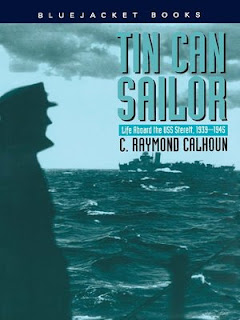
 In studying first-person accounts of naval battles, particularly memoirs from the Pacific theater of WWII, we see some great examples of the "player focused" perspective. The sailors, soldiers and marines who recall those iconic battles do not do so the way we're shown in films or other fiction - which is the point of view most licensed RPGs try to capture. As much as I like to watch SF media, the cinematic spectacle is not best seen from the table top.

    The people who actually fought and survived major naval actions in the bowels of their ships recall their own personal viewpoints which are focused on their immediate situation. Often, this can be just trying to keep their ship afloat. They usually didn’t know what is going on with the battle, whether they are winning or losing, or how much damage the ship had sustained. 

    In other words, the ships these people are on became a hostile environment of rupturing steam pipes, flooding compartments, shrapnel, and darkness. A Dungeon.

    This point of view, the completely personal perspective, is one that can be used in a Player Character-focused RPG.

    At first blush, this may sound like a railroad waiting to happen. Without command level decisions to make, can the Players truly be masters of their own destiny? To this as ask a question in return: Can players whose characters are optimized for non-space travel skills be said to have any more control over the ship that they are on? 

    This is a big complaint about space travel and combat systems I have heard at my tables; that there’s nothing for most characters to do. In the Crew as Damage Control concept, everyone has something to do, even if Character’s actions revolve around survival while the ship they’re on falls apart around them. Survival in a hostile environment may be stressful, but it's still PC-focused, which is the goal.

       With Crew as Damage Control, the aftermath of a space battle is where Characters really get to shine. Their ship is now a dungeon in fact, full of hazards like decompression, ruptured tanks, radiation leaks, boarding hostiles, and more. Navigating this kind of environment is challenging enough; repairing the damage is even more so. One thing I’d love to see is a party of PCs scavenging the wrecks of other spacecraft or nearby asteroids for supplies to repair their ship. 

    That's Character focused play.

    Admittedly, this perspective is still focused on combat, which is only one small facet of space travel. Other character-focused scenarios are possible. Space is full of hazards that must be overcome, from debris strikes to solar flares to mechanical failures. There can also be passengers, mysteries, and more in a space-faring location. As long as the action is focused on the Players and their Characters, the focus is where it should be.

    More to come on this topic.


Wednesday, January 5, 2022

Murdering Empire in a Single Page?

Yeah, that guy.
    Despite having had the long weekend, I haven't spent any of that time work on this blog. I have spent some of it thinking about an actual product. It's all in a very early stage right now, but I've become enamored with an idea inspired by binge-watching Questing Beast's Zine reviews and the one-page RPGs like the 24XX family of games.

    The idea is simple:  If your rules can fit on a single page front-and-back, then you could use them as the cover of a zine.  You could make a zine about anything you like, and include a bespoke variant of those one-page rules as the cover.  If those bespoke rules are closely enough related, and the zine contents are a semi-unified setting (like Thousand Islands, for example) then you don't actually need anything else.  You can use as many of the zines or a few as you have/want. 


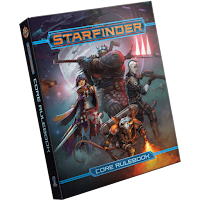
Where are the Aliens, Paizo?  Huh?

   I personally own 500-odd-page core rulebooks for some games that cover everything under the sun (or not) but they're hard to use because I may only need a fraction of the material,  and the things weigh like, ten pounds. If instead there was a zine that includes the basics of the setting (suitably anti-canonical) with basic rules as the cover, you could now play the game quickly and easily because you don't really need anything else.

    But say you wanted more.  Say, like me, you want to have spaceships a part of the game.  So you get the zine that has spaceships - and the rules on that zine's cover include starship rules while the zine has a fun adventure or something.  If the starship zine is all you have, it has enough rules to play a starship-focused game bt if you have other zines, then it adds to the available rules.  You can use as many or as few of the zines and their bespoke rules as you like.

    I'm hoping to have some more development with this idea as I blend in more of my ideas and preferences about what I like in games.  For those who are familiar with my previous body of work on DriveThruRPG or through Patreon, me working on short spats and zines should come as no surprise.

Wednesday, March 22, 2017

Starships & Spacemen Examined: I'm going to have to make my own setting, aren't I?


Ha!  Rhetorical question, Rocketfans - what else would I be doing?  It's not like I can leave anything alone...
      The deal breaker came with my examination of the FTL system.  It's a variation of the classic Trek/Alcubierre warp drive - which is bad enough, as warp drive has problems.  What's even more difficult for me to deal with is the speeds involved.  For an RPG it's perfect: Each warp factor is how many light years on the hex map you can travel in a day, and ships can travel between warp 1 and warp 8.  If you are a fan of The Original Series of the source material, that's between warp 7 and warp fourteen.  Needless to say, you can cover a lot of territory with that kind of drive.  At warp 8, Proxima b is only twelve hours away, and Gleise 581 is only 60.  The entirety of the Local Bubble would only take 50 days to cross - 200 light years, in less than two months.
     It's about here that I've always run into problems with SF RPGs: Maps of space. When you can travel across a wide swath of space in a short amount of time, it's easy to get to the planet of the week, but harder to maintain any sort of realism in your star mapping. While Game Design Workshop's 2300 AD is a unique exception, most games that obstensibly take place in our universe have star-maps that bare no similarities to observable reality.   S&S - like Traveller and Star Frontiers, doesn't even pretend to make accurate maps of the Milky Way and instead provide guidelines for making up star maps and even randomly generating stars and planets. That was fine in the 70s and even the 80s, when accurate star charts were hard to come by.  Since the advent of the Internet - and especially in the exoplanet discovery era of today, it becomes harder and harder for me to suspend disbelief.
Here, to be exact.
   Now, there are accurate star maps out there.  It would be a fairly easy if tedious task to add the know extra solar planets to them.  But making a star map of a large enough scale to be useful in Starships & Spacemen and shows accurate distances is nearly impossible.  Even if you projected the map onto a convienent wall or pool table or something, the sheer number of stars in a given volume of space (and the fact that they are stacked three-dimensionaly) make using the map in a game a daunting prospect and far from the relative simplicty of the S&S rules as written.  However, the movement system in the game tracks interstellar movement and gives you interplanetary for free - so it would appear that we have to have some sort of star-maps.
     There are, of course, star maps that reduce the nightmare of 3D or 21/2 D mapping into something that both has accurate distances and is easy to look at.  Node Maps are an easy method - it gives you the information you need without going into sensory overload.   That being said, Node Maps are also useless in the S&S game because they do not provide hexes to show interstellar movement.
    This is where I threw up my hands in despair. You can have accuracy, simplicity, or utility: Pick two.  I feel a psychological need for accuracy, and an intellectual need for simplicity, and an actual need for utility.   What am I to do.
     (sigh) Change the setting, of course.  I always seem to do that anyway.  But hey, that's what being a game designer is all about.
     Here's what I'm gonna do:  I will make a new system of starship movement and combat.  I will make deckplans for starships that use this new system.   I will also provide stats and such for Starships & Spacemen as written.  And White Star too - just to cover the whole SF OSR OGL alphabet soup.
     But stick with me on the new rules thing.  I have some ideas that may interest you.  We'll talk about them more on Friday.

Friday, October 14, 2016

Alternate Metaphysics Mechanics for Open D6 Part IV: Book Outline

     While it's true that I'm occupied primarily with Iso grid maps at the moment and my Hard SF Conjunction setting in the longer term, I haven't abandoned my work on making a new system for the use of Metaphysics in Open D6.  In fact, I've finished up an outline for an entire book!  Have a look-see, and let me know what you think.  I hope to move forward (even if its a paragraph at a time) in the coming months, so any comments would be valuable.  Hope you enjoy!

Opposing Force: Alternate Metaphysics Rules for Open D6


  1. Wielding Fate: Fate Points as the basis of the Metaphysics system
    1. The Big Change: A New Mechanic
      1. Sidebar: Fate binds all living things...
    2. Doing the Impossible: New Difficulty Levels
      1. Impossible: 40+
      2. Setting Difficulties
        1. Sidebar: Difficulty the easy way
      3. Examples
    3. Anything is Possible: Powers without Powers
      1. Powers as extensions of regular Skills
        1. Keeping Fate boosted Skills “Up”
        2. Examples
      2. Sidebar: Can regular people wield Fate?
    4. Wages of Fate: Fate Points in the new system
      1. Not so Different…
        1. Regaining spent Fate Points
      2. Sidebar: Fate and Codes
    5. Children of Fate: New Aliens and Changes to Old Ones
      1. New Stat: Fate Resistance
      2. Sidebar: Free Will versus Fate
  2. Wielders of Fate: New Organizations and Codes
    1. The House of Norn
      1. History of House Norn
      2. The Code of Norn
      3. Prominent Figures
    2. The Astartian Grenadiers
      1. History of the Grenadiers
      2. The Code of Astartia
      3. Prominent Figures
    3. Creating your own Wielders of Fate
      1. Concept
      2. Code
      3. Template
  3. Dueling Fates: New Weapons and Equipment
    1. Combat Spheres
    2. Grenadier Armor
    3. StarBlades
    4. The Boem
  4. Winged Fate: Starships and vehicles
    1. Racing Capsule
    2. Class-8 Astartian-Starfighter
    3. Arrowback Surveyor
  5. Pawns of Fate: New Metaphysical Templates
    1. Scion of Norn
    2. Astartian Grenadier
    3. Bladesmith of Solace
    4. Fate-Favored

Help make all our work possible.

Google+